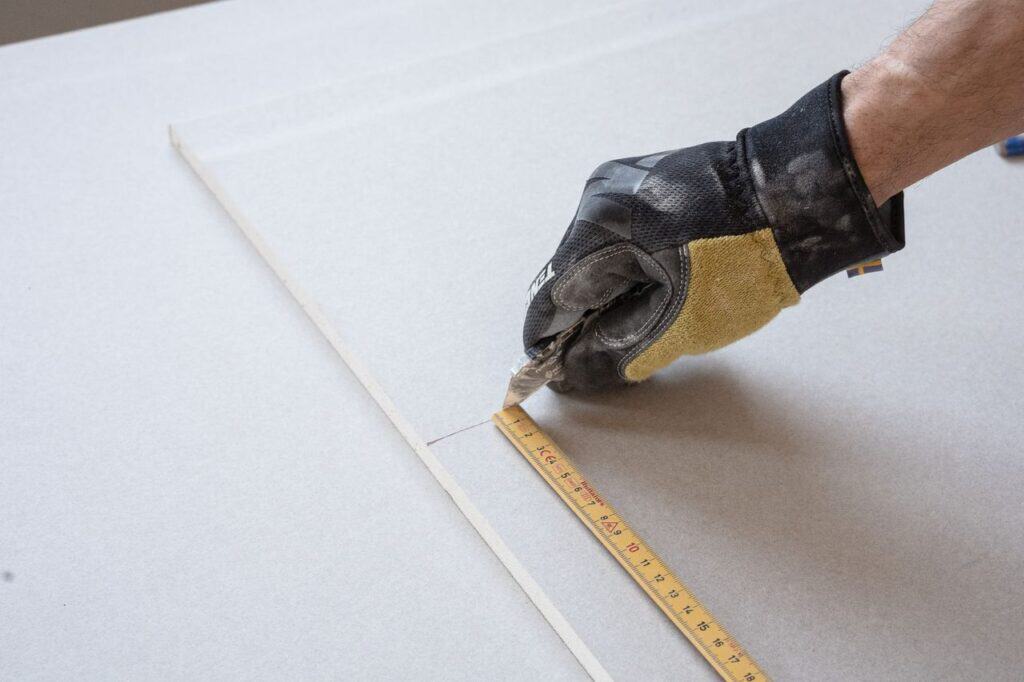
Drywall installation has a narrow margin for error. While it’s considered one of those tasks that competent DIYers can do themselves, it’s not without its complexities, and errors can and are commonly made.
But the thing with drywall mistakes is that they don’t always show up immediately. And if you don’t catch them immediately, then you’re only going to end up with patch jobs or full replacement down the line.
If this is something you feel has happened to your drywall installation, or simply want to avoid making mistakes, here are a few signs you made a mistake and you need to rectify them.
Screw Heads Are Popping Through the Paint
A screw head that pushes through the paper face of the board is a sign that the screw was driven at the wrong depth or missed the stud partially. Using the correct drywall screw for the board thickness to sit just below the surface without tearing the paper prevents this from happening in the first place. Popped screws can usually be reset and skimmed over rather than requiring a full patch.
Seams Are Cracking Along the Tape Line
If you see cracks that follow the taped seams between the boards rather than running randomly across the wall, this points to movement in the structure or tape that wasn’t properly embedded in the joint compound during finishing. This is different from random hairline cracks, which are caused by house settling, as seam cracks specifically follow the joint line every time.
Reinforcing the seam with fresh tape and compound after cutting out the cracked section usually resolves it. However, repeated cracking in the same spot can point to a structural issue that needs a closer look rather than a round of patching.
The Board Feels Soft or Spongy When Pressed
If there is a section of wall that gives slightly under light pressure, this usually means the screws in that area missed the stud. This leaves the board unsupported at that point. This tends to be more common near corners or around outlets and switches where cutting the board to fit an opening can leave less material anchored to the framing behind it.
Adding a screw or two into the nearest solid section of the stud usually firms the area back up without needing to replace any of the board itself.
Panels Are Sagging Between the Studs
A visible dip or wave in the middle of a panel, especially on ceilings, usually points to screws spaced too far apart or a board that’s too thin for the span it’s covering. Ceiling installations need tighter screw spacing than walls, specifically because gravity is working against the board rather than just against lateral pressure.
It can be a good idea here to add extra screws along the sagging section. Place them closer than the original run so you can pull minor sagging back to flat. However, a panel with a more significant dip usually needs to come down and be reinstalled with the correct spacing from the start.


Lewis Gordon
Lewis Gordon is a successful businessman living in Boston, Massachusetts. When he’s not working, he enjoys travelling – especially tasting other cuisines, scuba diving, watching and playing soccer. Lewis also has a love of dogs and is the proud owner of an English Setter.